
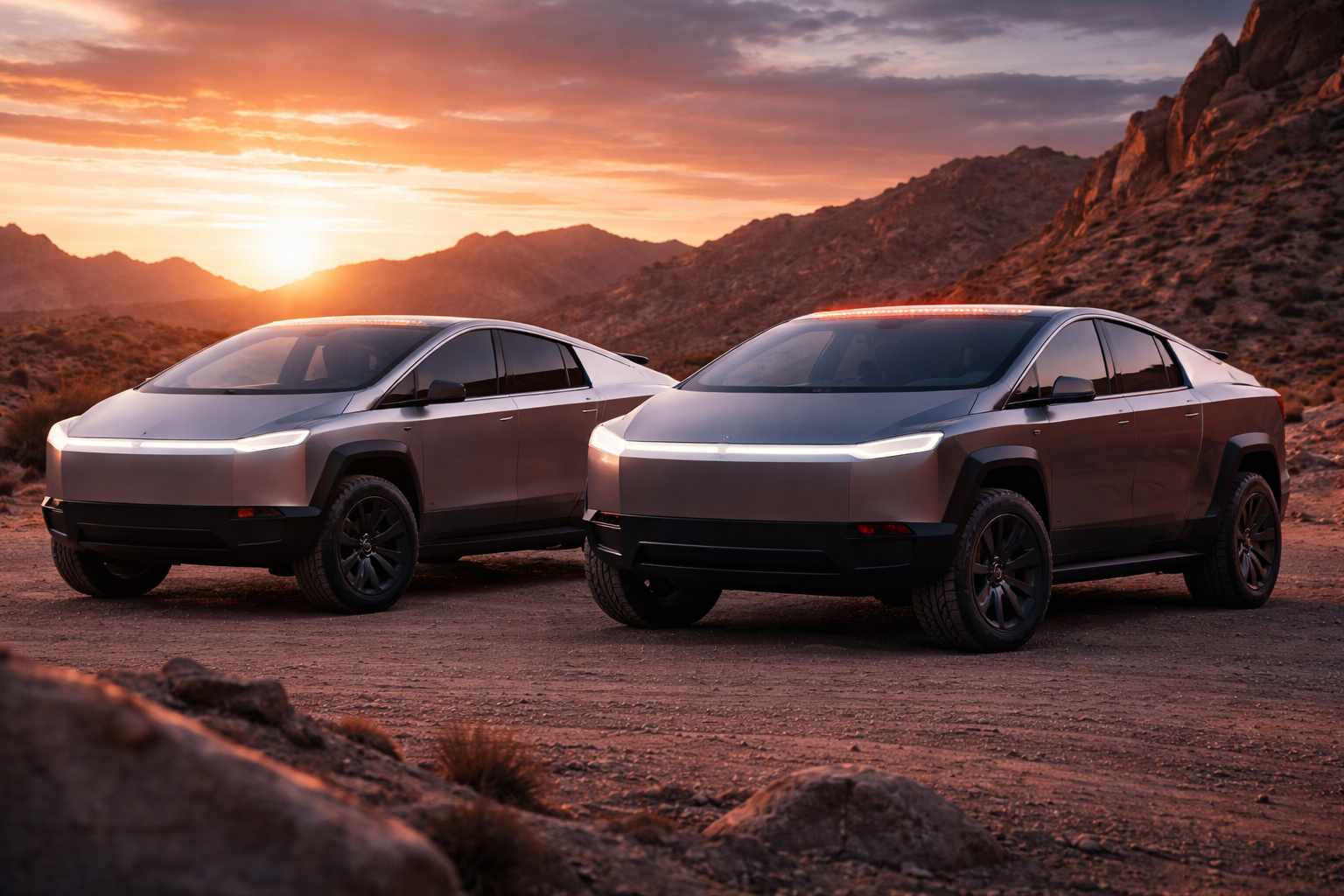
Tesla has changed its electric pickup lineup in the United States by offering a cheaper version of the Cybertruck while also slashing the price of the priciest variant. The firm unveiled a dual motor, all wheel drive Cybertruck priced at 59,990 dollars, making it the cheapest model that still offers four wheel traction and two motor power. Along with this, Tesla has trimmed the price of the Cyberbeast to 99,990 dollars from 114,990 dollars, a dramatic move that reflects the company's determination to be tougher on demand in the face of a difficult market.
Besides pricing shifts, Tesla is also refocusing on what it offers and how it packages features. The company plans to discontinue what it referred to as the Luxe Package, which included a combination of Supervised Full Self Driving and free charging on the Supercharger network. Tesla's decision to get rid of that package means it is essentially breaking up a premium bundle that used to justify higher pricing, while reshuffling the value proposition across the Cybertruck range.
The changes are not merely a single promotional touch but align with a broader rearrangement of the lineup, with pricing and features being changed simultaneously.
Such adjustments to the Cybertruck are in line with another recent change in Tesla's main lineup. The company had unveiled a new all wheel drive version of the Model Y priced at 41,990 dollars in the United States a short while ago. Taken together, these decisions indicate that Tesla is becoming more flexible with prices and configurations across more than one model, expanding the number of price points at which it can compete while trying to keep buyers loyal to the brand. It is a well known Tesla tactic, but the timing and the grouping of several announcements reveal the pressure the firm is feeling in this cycle.
These moves are presented as examples of a cost cutting plan directed at 2026, as demand for electric vehicles slows. The argument is simple. As sales soften, prices become a leverage tool, and vehicle lineups typically get simplified. Tesla has decided to synchronize both of these actions. Furthermore, the company is also affected by changed policies, as the federal tax credit worth 7,500 dollars was eliminated by the government under Donald Trump, which reduces the immediate financial incentive for customers and can make sticker prices feel heavier at the moment of purchase.
At the same time, Tesla is grappling with ever intensifying competition from abroad, which worsens the dilemma of pricing and product positioning. Analysts are cautioning that the company may experience pressure on its profit margins in such a situation.
While price cuts may help to boost demand, they also reduce the gap between selling price and manufacturing cost unless other improvements compensate for the decline. The caution is not about one specific model but rather about the broader business model when price is the primary means used to keep up momentum.
In addition to the vehicle range, Tesla's management is also hinting at a shift in priorities. CEO Elon Musk declared that the company would halt production of the Model S and Model X, a plan seen as a way to make room at the company's California plant for the development of humanoid robots. This decision stands in contrast to the continuation of the vehicle story. On the one hand, Tesla is revising its prices and bundles to survive in a cooling market. On the other hand, it is redirecting its manufacturing capacity toward a different product category, showing how the company is trying to juggle short term sales realities with long term goals.